


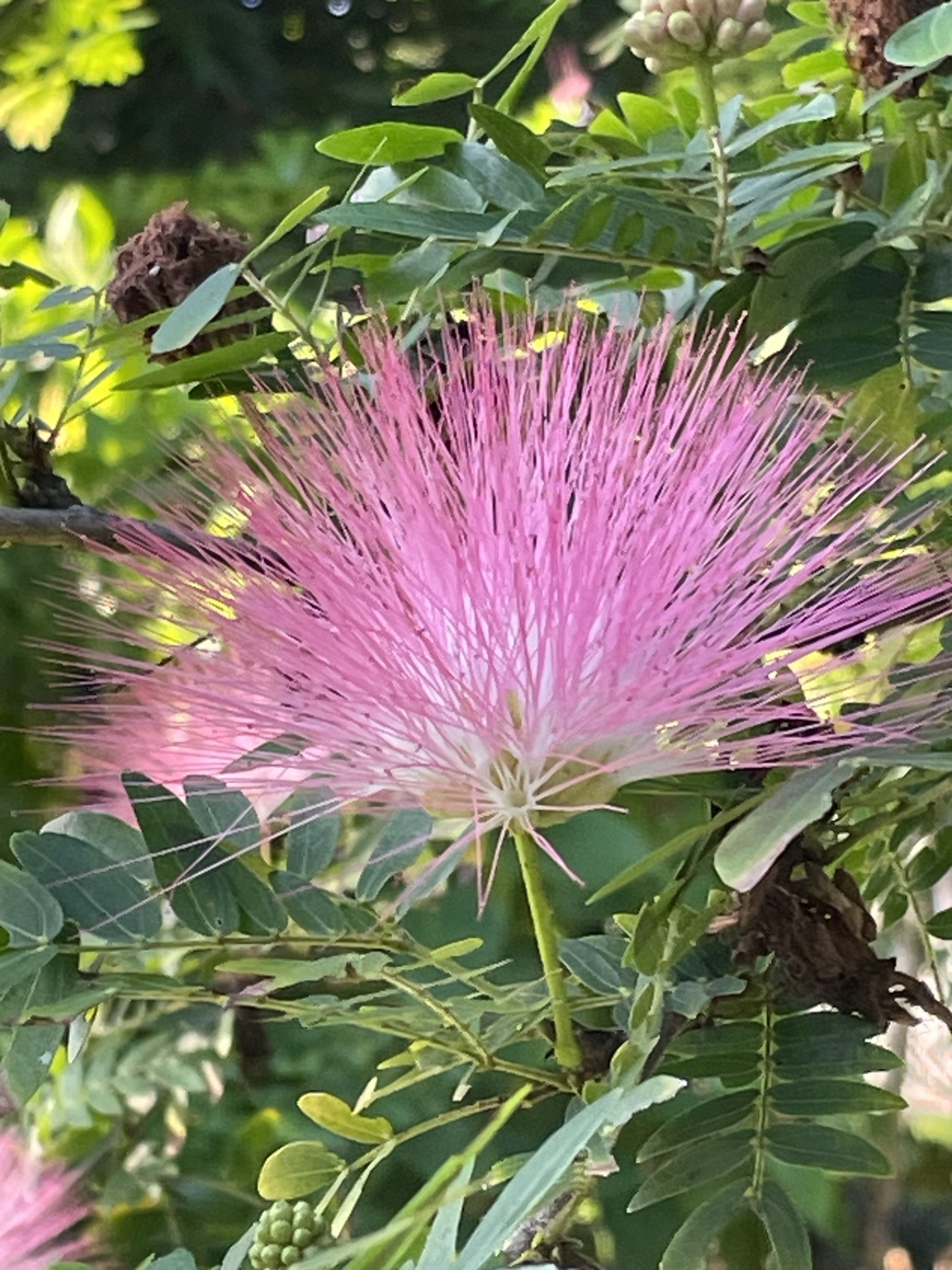
Despite its delicate appearance, the Powder Puff shrub, genus Calliandra, is a rugged perennial that deserves a place in most South Florida gardens for a variety of reasons. Available in several colors and with the option of some compact species, these evergreens can enhance a landscape with delicate foliage and dainty blooms that last for several days. Beyond its pretty flowers, Calliandra is an agricultural powerhouse in rural areas of the tropical world.
Native to the New World tropics, Calliandrawas introduced to Indonesia in the 1930s and nearly 150 species are now found throughout pantropical regions. Powder Puffs, if allowed to grow naturally, can encompass an area as wide as their height of 15 feet. Pruning is recommended if space is limited because they will sucker and spread, but fortunately this is easily done and encouraged if you want to use them to create a hedge or train as a standard or tree form. The lacy but dense foliage creates a protective habitat for nesting birds.
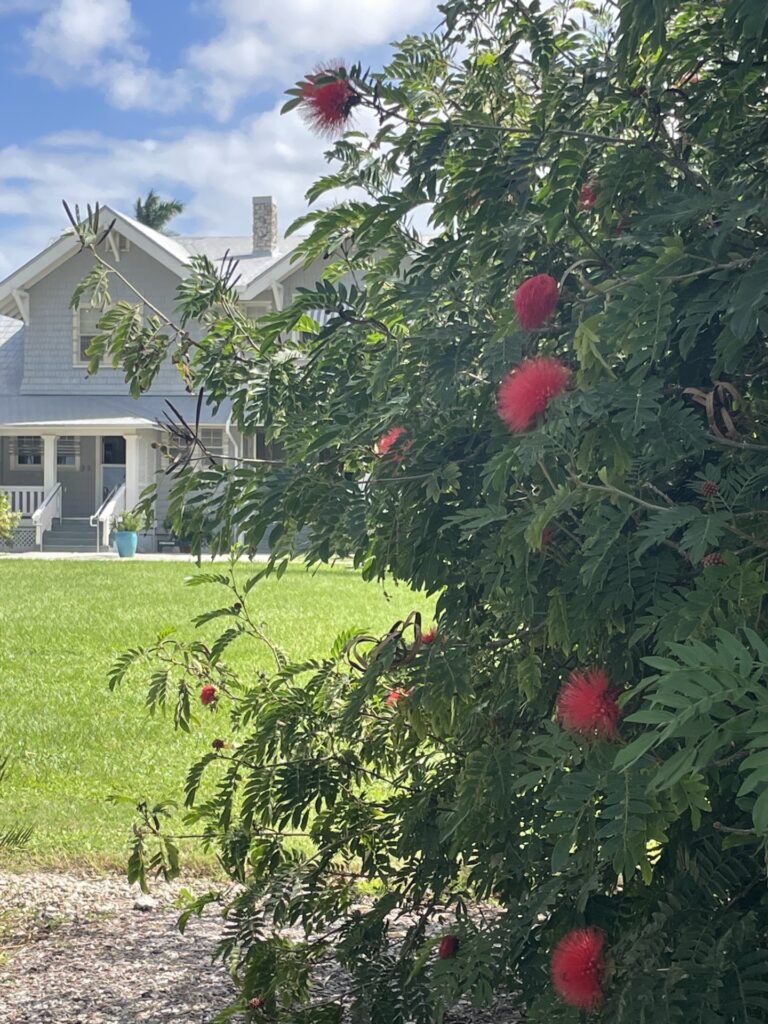
Weather in Southwest Florida is simply perfect for growing Calliandra, which loves wet, humid summers and dry winters with full sun. Calliandra haematocephala, meaning blood red head, is the most popular species found throughout the Edison and Ford Winter Estates. Near the Moonlight Garden, a white flowered varietal called “Alba” arches gracefully from below the Cliff Date Palm over the lawn. When the resident Moonlight Garden bunnies are around, they love to snack on the fallen flowers which, come to think of it, look like cotton tails themselves. A sprawling red Calliandra has been growing for years along the riverside of the Ford property, where it has survived hurricane surges despite the fact that it is not a salt tolerant plant.
While the red and white species have solid color stamens, C. surinamensis produces more than 100 stamens that are white on the bottom and finish to a rosy pink, giving the overall impression of a pink ball and is commonly called the Pink Powder Puff. These white and pink flowers are sticky and typically open after rain and will close in the hottest afternoon heat to protect their pollen and then reopen for cool evenings to allow moths to pollinate their flowers. Many species of insects and butterflies rely on Calliandra nectar, which is said to produce very tasty honey. A Calliandra surinamensis grows on the McGregor side of the Edison main house, where it rises above its garden neighbors.
Beyond its ornamental value, Calliandra has important economic benefits to many rural communities around the world. A member of the Fabaceae family, Calliandras, are nitrogen-fixing shrubs and trees. Many gardeners are already familiar with growing beans or legumes and their ability to intake nitrogen from the air through their leaves and return nitrogen to the soil via their roots, making it readily available for other plants to take up. In areas where synthetic fertilizers are unavailable or too expensive, the Calliandras, which grow easily on most any well drained soil, help to keep soils fertile and their spreading roots can stabilize soils thereby preventing erosion. It is important to note that the use of nitrogen fixing plants is a sustainable alternative to the use of synthetic nitrogen found in fertilizers where unused fertilizer, high in nitrogen can leach into waterways and groundwater.
Hardy and long-lived perennials, the branches can break easily but Calliandras quickly regrow and if a standard form (single trunk) is desired, regularly pruning to shape and discourage new growth along the primary trunk is necessary. They do not require additional fertilizer and do not seem to be susceptible to any major pest. I would like to note that the only plant on which I have ever seen the colorful thorn bugs is the Calliandra. Thorn bugs are sucking insects that make a colorful lineup on a branch while draining the sap of the tree. To date, I have never seen an infestation so bad as to kill a Calliandra, at least not here.
The usefulness of Calliandra was not discovered in its indigenous land, but farmers in Indonesia discovered that its wood has a low moisture content, burns very hot and is a reliable source of quality charcoal. Though requiring good water to become established, these plants can survive up to 100 inches of annual rainfall (Southwest Florida averages 54 inches per year) and turn around and survive up to seven months of drought. They are not fussy about the soil, but it must be well drained at all times, something we love about our sandy substrate.
According to Feedipedia, an online encyclopedia of animal feeds, the leaves and seed pods of Calliandra are high in proteins for quality fresh fodder eaten by ruminating animals such as goats, sheep and cattle with the additional benefit of producing 24 percent less methane exhaust over grass fed animals.
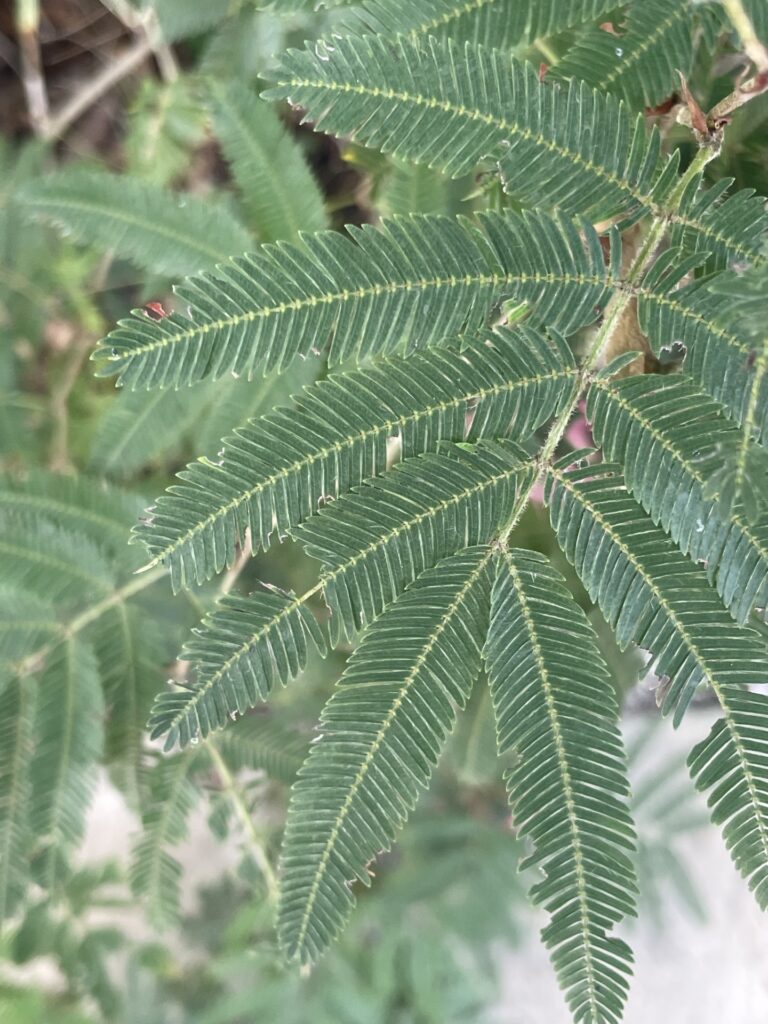
Calliandras produce tight little raspberry-looking buds that open to a multitude of stamens, delicate filaments topped with an anther, or pollen patch. While they can be grown in a planter, keep them pruned, and once a year, root prune them, if you wish to maintain them as a container grown specimen. Calliandras are evergreen, another excellent characteristic for a hedge, and their bi-pinnate or twice-divided, leaves will close up at night. They are closely related to mimosa and Albizia trees which are both invasive in Southwest Florida.
Calliandra tweedii, which grows along the pedestrian walkway near Edison’s laboratory is an American native Calliandra that is sometimes called the Mexican Fairy Duster. A smaller, more compact Calliandra, its beautiful foliage is very fine and almost fernlike. It grows naturally in the Sonoran Desert of Arizona and northern Mexico.
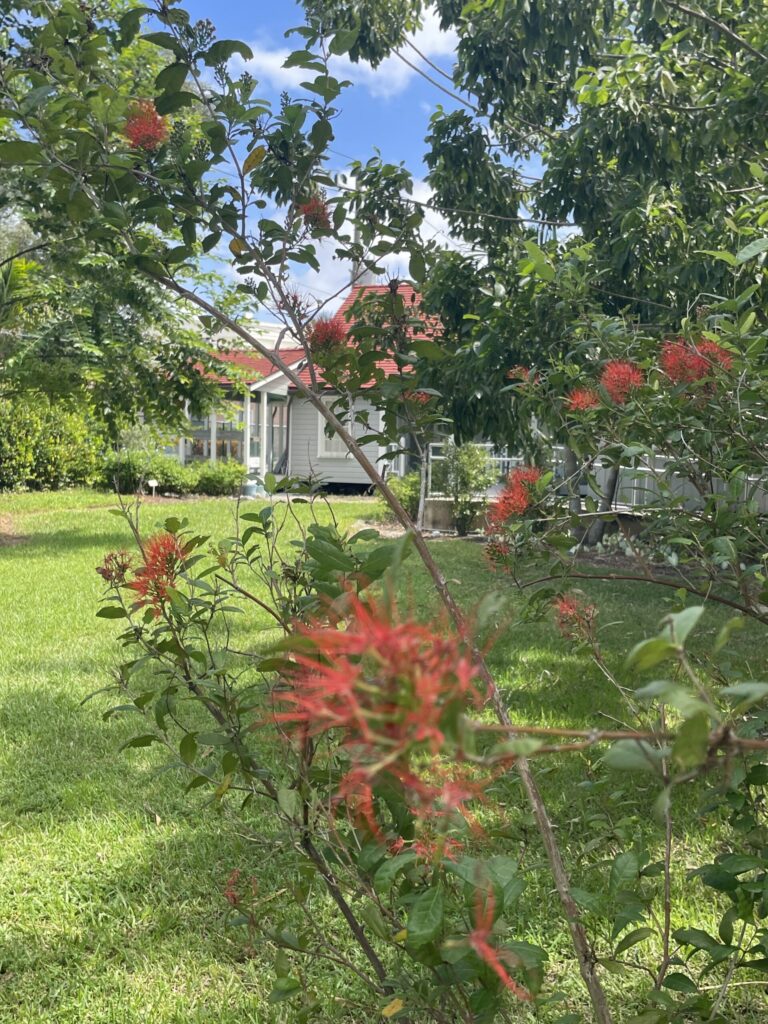
Growing behind the Edison Caretaker Cottage is the Thailand Powder Puff (Combretum constrictum). While the flowers strongly resemble the Calliandras, it is a member of the Combretum family, which includes tropical plants native to Africa, including the spectacular Rangoon Creeper. When one takes a closer look at the leaves of Combretum constrictum compared to Calliandra, the distinction will be obvious.
Visitors can see these plants and more when they visit the more than 20 acres of botanical gardens at the Estates.
THE COMBRETUM CONSTRICTUM (THAILAND POWDERPUFF) GROWS NEAR THE EDISON CARETAKER’S COTTAGE.
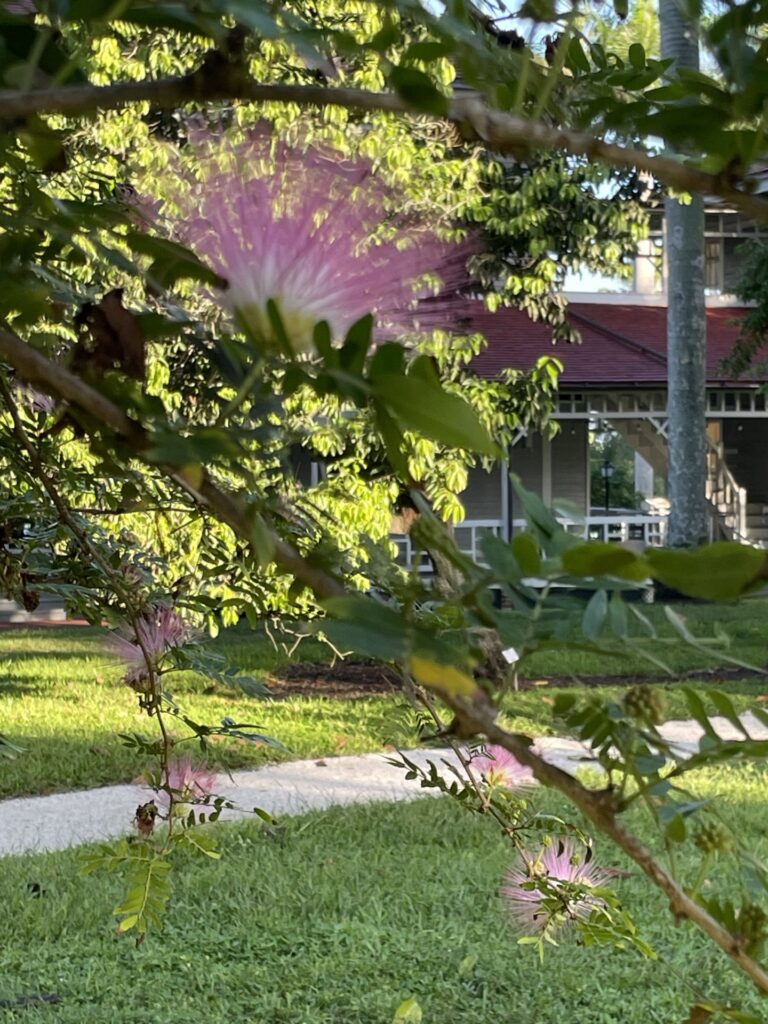
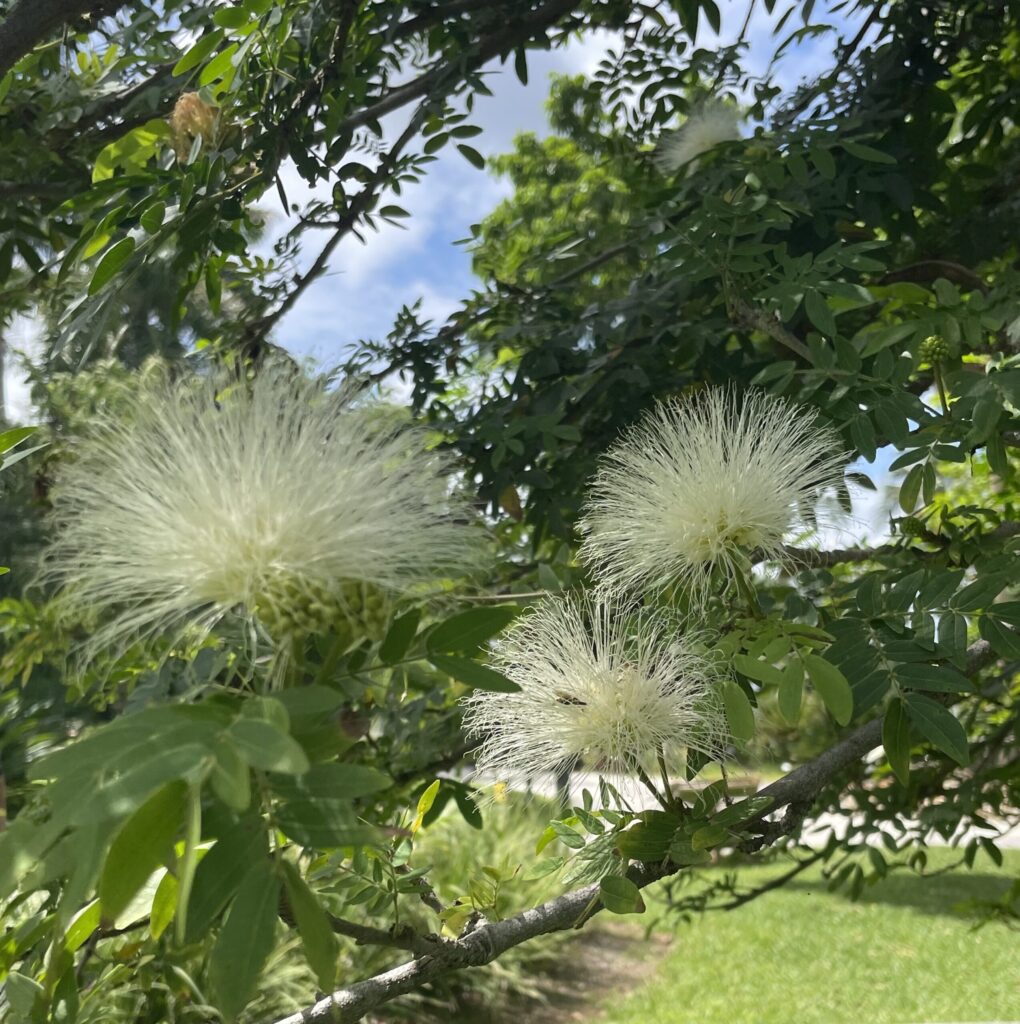
“ALBA” GROWS NEAR THE MOONLIGHT
GARDEN, ALONG WITH OTHER WHITE- FLOWERED PLANTS.
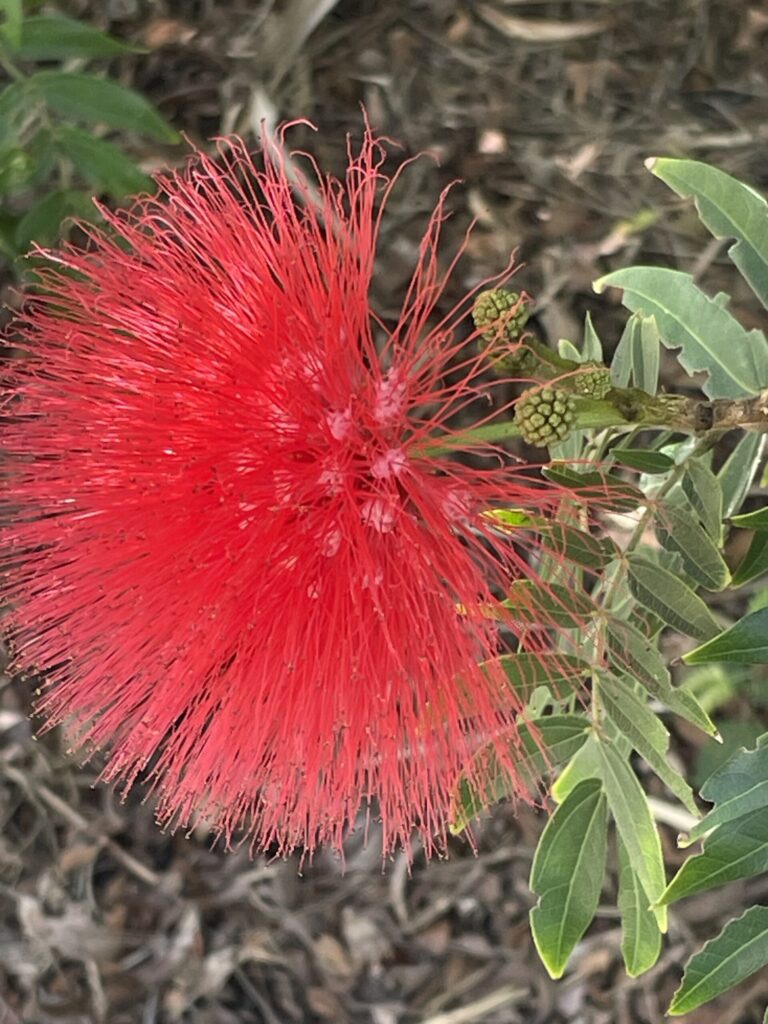
PHOTO OF A RED COMBRETUM HAEMATOCEPHALA.