


JULY ON THE WATER
July is the month summer weather settles in bringing hot humid days, often with little wind until early afternoon as a sea breeze kicks in, followed by thunderstorms. Most anglers opt for an early start to take advantage of calm seas and avoid the mid-afternoon heat and storms.
For those looking to bring home fish dinner, mangrove snapper is a good choice through the summer. No need to make a long run offshore, as snappers are caught throughout the inshore and nearshore waters. Fish for snapper under docks, bridges, piers, or any type of structure. Many anglers do very well from the shore without the expense of a boat. After several hurricanes, shore fishing locations are still limited, but there are piers and bridges open to fishing. From boat, fish under deeper mangrove shorelines, oyster bars, sand potholes, and rock ledges or structure in and near the gulf passes. Mangrove snapper is one of our tastier fish and fights hard for their size. They are a great summer target. Often leader and hook shy if the water is clear, it’s necessary to lighten the tackle. Inshore, I go with three or more feet of twelve to twenty-pound fluorocarbon leader and a 1/0 or smaller circle hook.
Redfish and sea trout are caught throughout the summer. High tides give the best opportunity for redfish as they are foraging under the shade of mangrove shorelines. Sea trout run in schools with the best bite coming over the morning incoming tides as cooler water moves over grass flats. Grass flats with clear or clean water in four-to-eight-foot depths are favored areas.
Calm summer mornings give good opportunities to run offshore. American red snapper season is open in gulf waters for recreational anglers through the month of July for those willing to spend the fuel money for a long run offshore. Other fish including mutton, mangrove, and yellowtail snapper, plus red grouper can help fill up the fish box. Check current regulations and seasons before heading offshore as they change often.
Closer in, within sight of land, reefs and wrecks can be productive with everything from snapper to goliath grouper. You will not catch a big red snapper, but you can fill a cooler with tasty filets and save a lot of fuel money. Anchoring up current of structure with a fresh chum bag is preferred. A variety of baits is a good idea as well as an arsenal of rods rigged and ready from light to heavy action.
Keep a lookout for speedsters such as bonito, Spanish mackerel, and king mackerel harassing bait schools in depths from twenty to ninety feet. Small spoons or Tuna Jets in various colors can bring instant hookups around feeding activity. Watch for birds and surface commotion to locate the fish. If you have a live well full of bait fish, a little chumming may quickly get the action started. Artificial reefs are a natural attractant for bait fish followed by predators.
Catch and release snook fishing is strong throughout the summer. Large females are up and down the coast surrounded by smaller males as they are in their summer mating rituals. Often the best fishing happens in the surf along the beaches. Snook will swim parallel to the beach, often just a few feet from shore in search of their next meal. This offers great sight fishing possibilities for both conventional and fly anglers. They can be located anywhere along the beaches, but if you find some type of structure in the water, such as a tree branch or rocks, they often congregate near it.
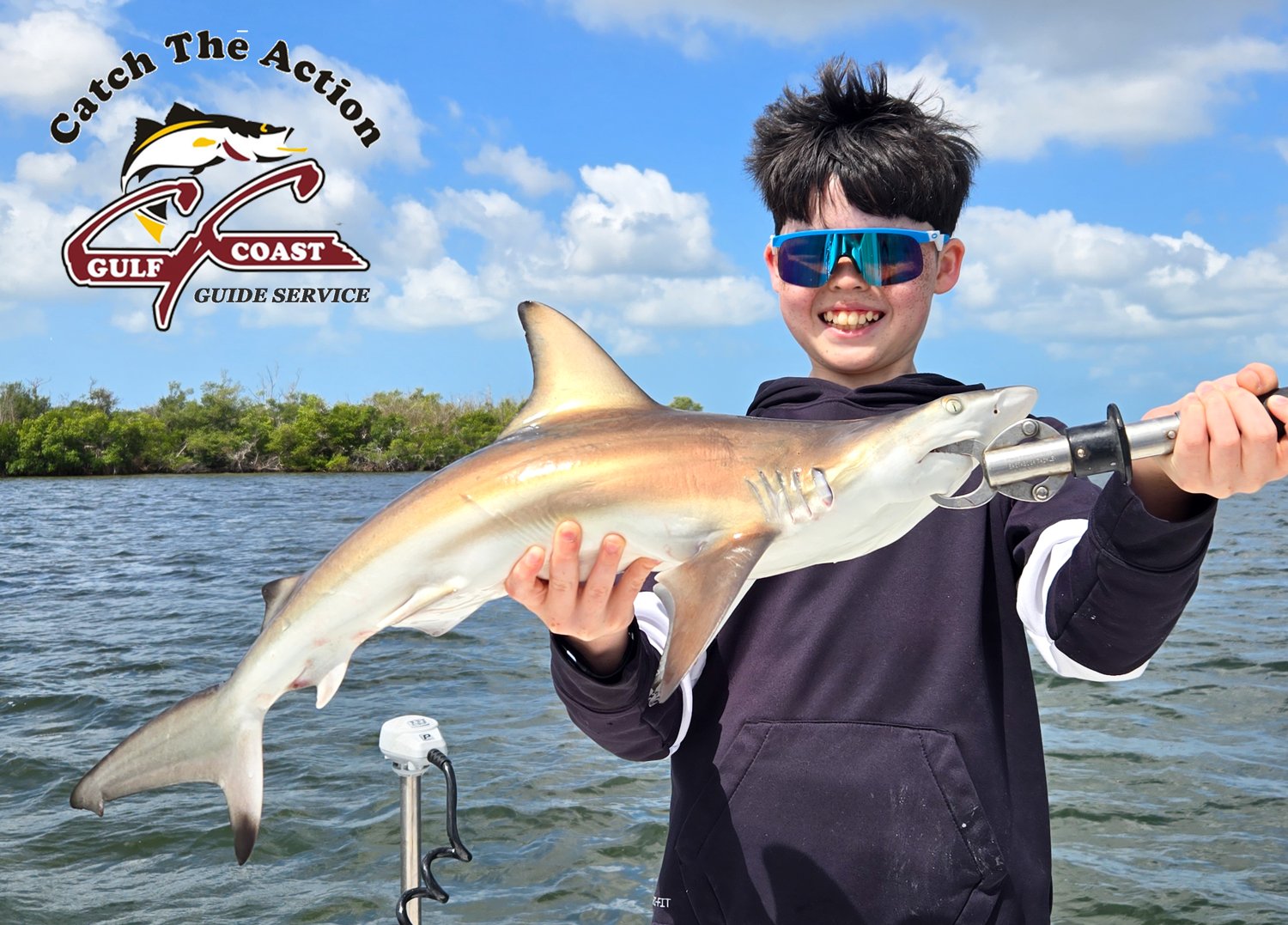
Sharks are another summertime favorite. Varieties of species both large and small are common catches inshore and off. While they are a nuisance for some, anglers target them for their fighting ability. Sharks play an important role in our ecosystem; please make every effort to quickly release them unharmed. Every kid loves to catch a shark of any size, now is a good time, just make sure and do it safely for both the angler and the shark.
Keep up to date with fishing regulations and seasons in the area you fish, as they change often. You can visit http://www.myfwc.com for all current state and federal regulations.
For charter information, please contact us at Gulf Coast Guide Service and “Catch the Action” with Capt. Bill Russell, call or text (239) 410-8576, website: http://www.fishpineisland.com, email: [email protected].
Captain Bill Russell is a native and lifelong resident of Pine Island who has spent his entire life fishing the waters surrounding Pine Island and southwest Florida. For the past 30 years Bill has been a professional fishing guide who takes pride in customizing each trip to ensure everyone on board has a great time and will return again. Come join us and “Catch the Action.”