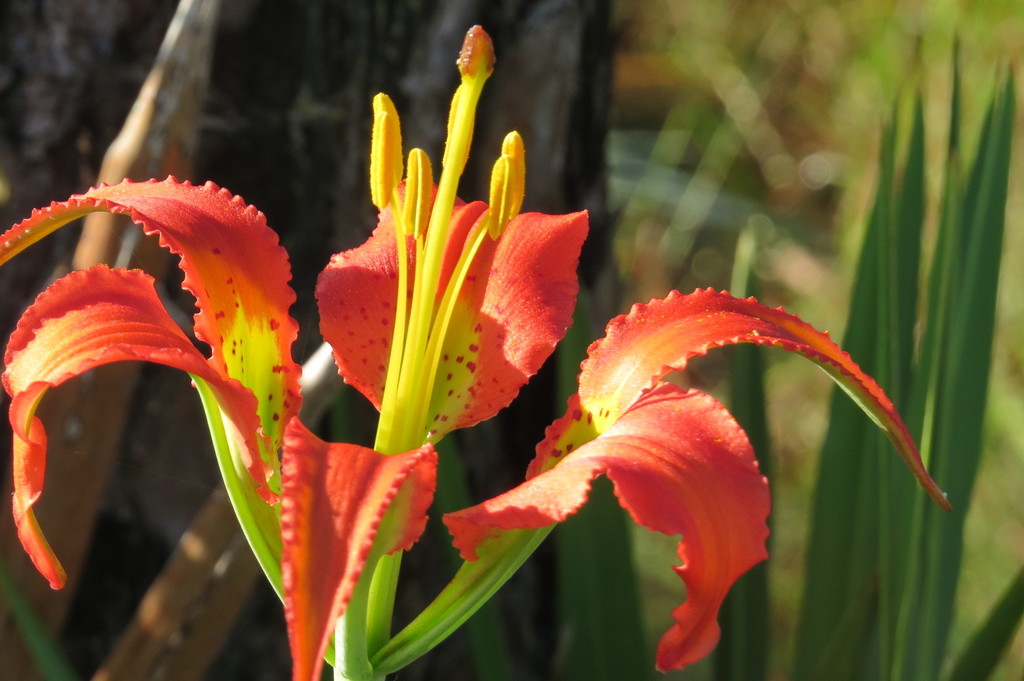


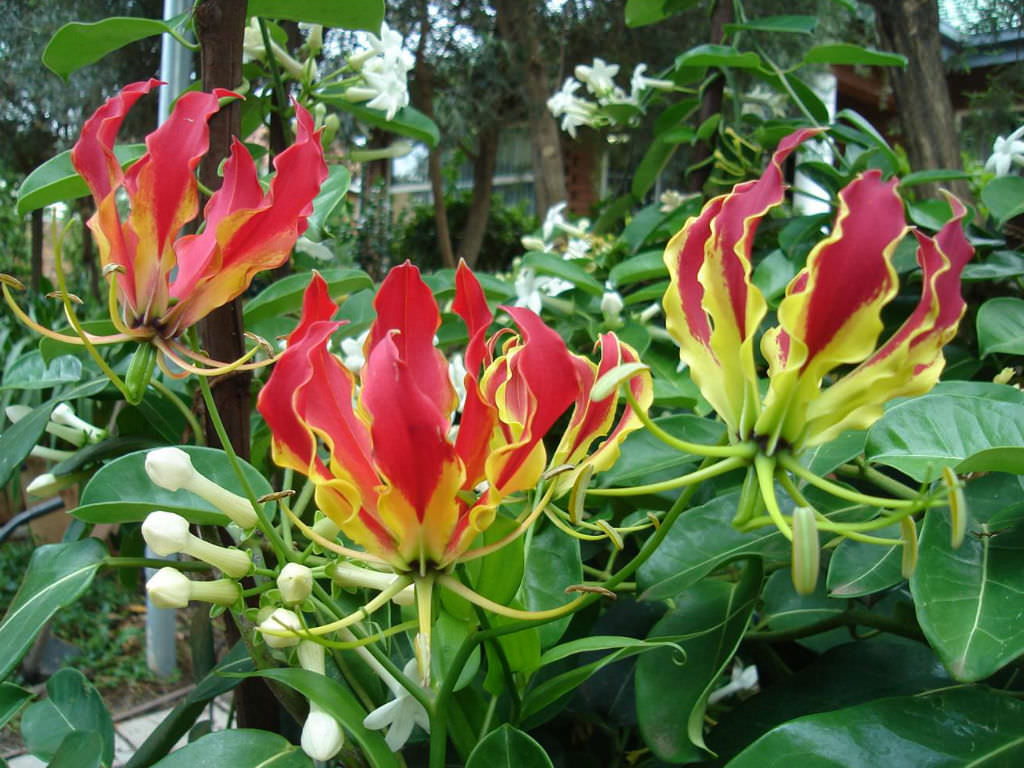
GLORIOSA LILY IS A NON-NATIVE, VIGOROUS VINE THAT GROWS FROM A CORM.
Mina Edison loved lilies – European Madonna lilies in the Moonlight Garden, waterlilies in her specially constructed lily pond adjacent to the Caloosahatchee River, a host of crinums outside her winter home, to lilies-of-the-valley and trout lilies scattered throughout her Glenmont gardens. Despite the common lily label, most of these are not true lilies. The genus Lilium is characterized by tall stalks with six tepals (the sepal and petal), showy flowers, and plants that rarely grow as perennials in Southwest Florida.
A notable exception is the native pine lily (Lilium catesbaei) found primarily in pine flatwoods and wet prairies and not readily available as a cultivated specimen for sale, as it is difficult to propagate and is a protected native plant in Florida. Sporting the largest flower of North American lilies, these plants respond well to fire, are dormant in winter and are intolerant of salt, drought, or floods.
Crinum lilies belong to the Amaryllis family, water lilies to the family Nymphaea and day lilies to the Hemerocallis genus with flowers known to open for a single day, unlike long lasting true lily flowers.
Visitors to the Estates will come across another non-lily, a lily vine that bedazzles but must be respected – the gloriosa lily. While there is no evidence that Gloriosa superba was part of the historical Edison or Ford landscape, today they grow in several gardens throughout the property. The arresting blooms will not be mistaken for any other plant; just their shape suggests a floral interpretation of a living flame. Native to the Old World, this is a vigorous vine that grows from a corm, while true lilies are herbaceous perennials that re-grow each year from a bulb.
Mina’s Madonna lilies, a true lily (Lilium candidum) grew as unbranched stalks topped with magnificent flowers. Perhaps due to the poor drainage or poor soil in the 1929 Moonlight Garden, these natives of the Balkans and Middle East regions, did not thrive and were noted to be gangly. Unlike many other bulbs that have papery layers, true lily bulbs have scales that are actually modified leaf structures, a characteristic unique to lilies. As one-time caretaker and botanist Henry Nehrling noted in his chronicles, the Madonna lily could not thrive in Florida. What he did not explain is that these true lilies require a winter dormancy for about four months at temperatures not to exceed 50 degrees. True lilies are native to the northern hemisphere and have never been known to become invasive.
TO BLOOM IN JULY AND IS APPROPRIATELY NAMED FOR
INDEPENDENCE DAY
Climbing to heights of 12 feet, the gloriosa lily (Gloriosa superba) vine, also called cat’s claw, requires a tree or trellis to support itself. I have personally seen this vine, left unchecked for a period of years, nearly cover an entire pool cage. The tubers of gloriosa multiply readily in well-drained soils with good light, and it is deemed a nuisance plant in Australia and some Pacific islands. It is important to note that though the flower is quite desirable in floral arrangements, all parts of this plant are considered highly toxic to humans and domestic pets; and so are crinum lilies, calla lilies, peace lilies, hurricane lilies and lilies of the valley (none of which are true lilies). Perhaps it is the resemblance of their flowers to true lilies that earns them “lily” monikers.
Gloriosa lily is the only species in the genus Gloriosa and it’s in the family Colchicaceae which does not include any other genus that most readers would recognize. The family name is derived from the presence of colchicine, an important component of many modern medicines.
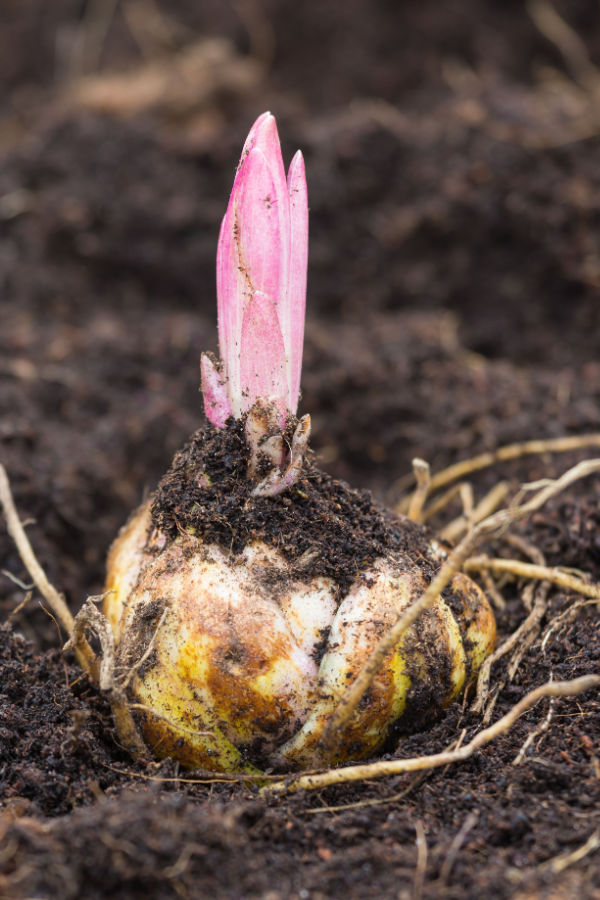
THAT RE-GROW EACH YEAR FROM A BULB.
Native to Africa, this gorgeous flowering vine is the national flower of Zimbabwe and is highly frost sensitive. Ironically, due to over collecting, the plant is considered threatened in its native lands and is under national protection status. Zimbabwe chose the Gloriosa lily to represent the renewal and rebirth of its people in the face of years of challenges and difficulties.
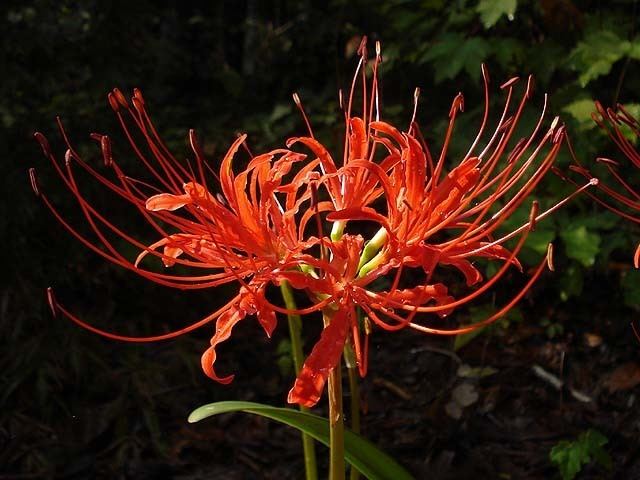
The latest season lily, blooming around the gardens is the hurricane lily (Lycoris radiata), which blooms in September. A leafless tuber, this is a great “lily” for a mass planting of color. Sometimes called red spider lily, these do best in zone, 9b and must be provided with full sun, especially in the winter.
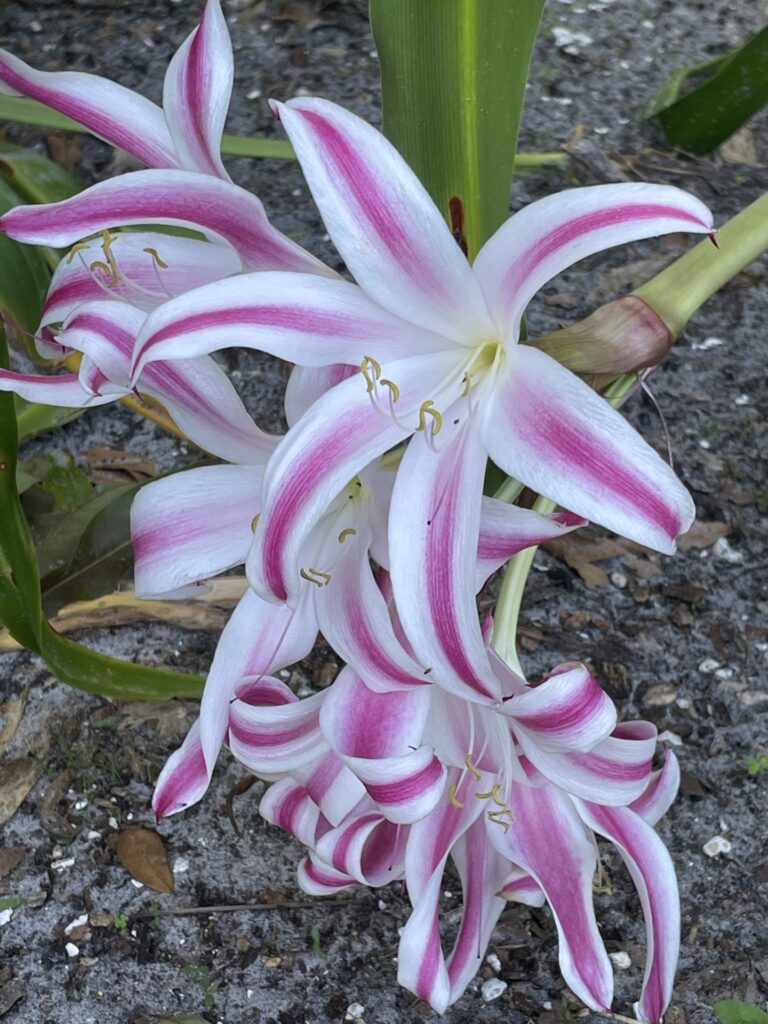
Crinums, though not true lilies, are most closely related to the Amaryllis family and fare best as “back of the garden” plants, where their neat foliage will blend until the day the extraordinary flowers emerge as a focal point. Apropos of July 4th, the stars & stripes crinum begins to bloom in July. Once established, all of these compact hybrid crinums are quite drought tolerant, though they will bloom better with regular water during prolonged dry spells. On your next visit to the Estates, look for these around the Kapok tree!