

JUNE ON THE WATER
June begins the slowdown in Southwest Florida as many people have left the area for the summer. This is good for fishing as there are far less boats on the water and less fishing competition.
As always when fishing, there will be good and slow days. With the summer heat the bite is often better early and late in the day, however, be aware of thunderstorms in the afternoons. If you have the opportunity, fishing after a late day thunderstorm is often good once the storms pass. However, we have very nasty and dangerous thunderstorms, do not put yourself or others at risk if lightning is in the area.
Tarpon are in full swing throughout the month. Fishing around the full and new moon tides may give you the best shot at conquering the silver king. You can make tarpon fishing as easy or as difficult as you like. They are big fish with a large appetite and a palette for a lot of different foods. Many choose to spend the day getting in the perfect position to place a hand tied fly in one’s path in hopes he gobbles it in, or you can simply anchor up in known tarpon travel lanes and a place a variety of baits out in their path. Place the rods in holders, kick back relax and let them come to you. Although tarpon have a big appetite, they often prefer small baits, and more often than not they turn their nose up to all offerings.
Warm water brings a lot of sharks to our coast. If you want to battle a big fish and avoid the tarpon crowds, sharks are a good alternative. Anchoring up with fresh bait soaked on bottom or under a float while waiting in the shade with a cool beverage is relaxing and productive. Blacktip and spinners sharks are strong, fast, and acrobatic, often rivaling a tarpon. Tarpon and sharks feed on many of the same baits; tarpon hook-ups are common when shark fishing. Big bull and hammerhead sharks follow tarpon schools awaiting a tired hooked fish for an easy meal, and large lemon sharks are around throughout the inshore waters.
If you are looking to bring home dinner, snapper may be your best bet. Decent size mangrove snapper move inshore as well as around the gulf passes. Large mangrove snapper, plus grunts and other bottom dwellers are plentiful in gulf waters within sight of land over hard bottom and reefs. Shrimp, squid, and small pinfish or pilchards are candy to snapper, but you need to remember they have keen eyesight and easily become leader shy. If the water clarity is good, dropping down to ten- or twelve-pound fluorocarbon leader may be necessary to fool the larger fish. A fresh block of chum also helps with the bite, especially offshore.
The best snook fishing during the summer months is often near the gulf passes, beaches, and islands. Snook may range in size from under twenty inches to big females over forty inches. Summer is mating/spawn season with schools found along the beaches and nearby structures with good tide movement. When active and hungry, they will pounce on a variety of baits. If not, they can be difficult to entice to eat any offering. Snook are most active early and late in the day, and feed heavily at night. Snook season is closed through the summer months with catch and release only.
As the summer heat turns up, redfish hang under the shade of mangrove shorelines and structures such as docks and piers. Live bait, cut bait, and lures all work, just some better than others at different times. An easy and productive method is to soak oily cut bait or crab on bottom and let the scent bring in the fish. It works great for redfish, and often snook and big trout, just be prepared to unhook a number of catfish and stingrays.
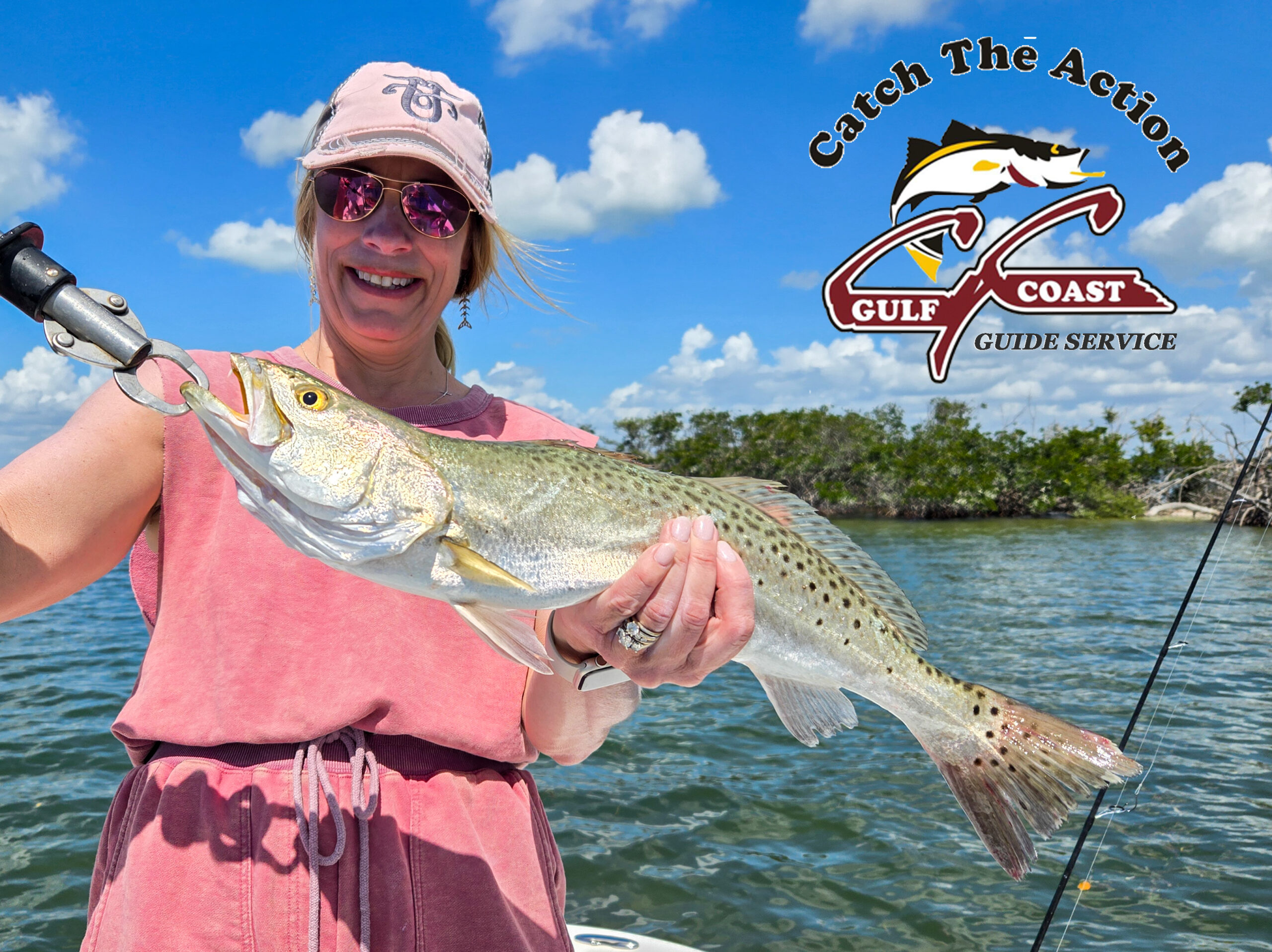
Spotted sea trout, Florida’s most popular inshore fish, are plentiful throughout the inshore waters. Most are caught over grass flats in four to eight feet of water. Over the summer they can also be caught along the beaches and passes, often mixed with snook. Fishing over grass flats one can expect a mixed bag including ladyfish, mackerel, jack crevalle, sharks, bluefish, and other species. It’s possible to hook sea trout on a variety of lures and live baits. The largest sea trout are caught around oyster bars and structure with good tide movement.