Many years ago, strolling along the McGregor Avenue sidewalk, I noticed brilliant blue berries, exceeding 1.5 inches in diameter, littering the crevices and cracks. They weren’t blue as in blueberries, but a startling metallic cobalt blue – as in Ceylon sapphire blue – one of my personal favorites.
The only true-blue fruit in the plant world, the source of these magnificent berries was a Blue Marble Tree – Elaeocarpus angustifolia (syn. E. grandis). Felled by Irma in 2017, the tree once stood on the residential property that immediately abuts the McGregor parking lot. My fascination with this tree and subsequent “cousins” has never withered.
The blue is real – it’s not purplish and it’s not a pigment. The color comes from the structural elements of the fruit. Layers and layers of cellulose reflect blue wavelengths of light, the same phenomenon responsible for the blue color of chameleons. When the fruit was assessed for pigment, the results were grey, confirming the absence of pigment. Evolutionarily speaking, it is believed the color evolved to attract birds to eat and spread the seeds of the fruit.
Soaring to 120 feet, the tree is native to the lowland rainforest of Australia. It is one of nearly 500 species in the genus Elaeocarpus. Mature specimens feature buttressed roots, and its species name means narrow leaves. It is now common throughout many areas in proximity to the Indian Ocean. As in many trees that have close ties to indigenous cultures, the Blue Marble Tree goes by many common names including the Blue Fig, Blue Quandong and Shiva’s Tears.
Considered edible, but not palatable by humans, the fruits, particularly those that pass through the alimentary canal of cattle, result in clean burl-like seeds that reveal a heavily sculpted look or faces, “Mukhi,” with a rich brown color and these “Tears of Lord Shiva” are the source of Rudraksha beads, used to make Mala, meaning garland or prayer beads. Symbolizing compassion and protection, the Mala features 108 beads plus one large guru bead. They are used in Hindu practice, yoga, and meditation.
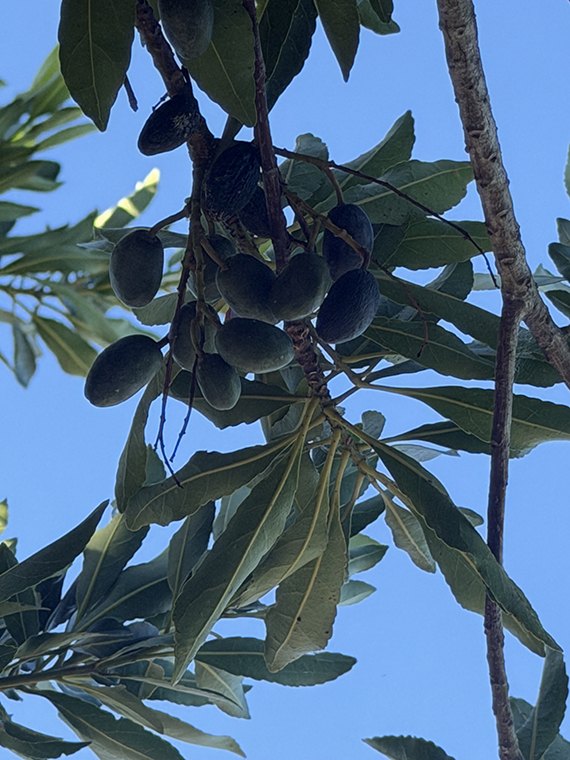
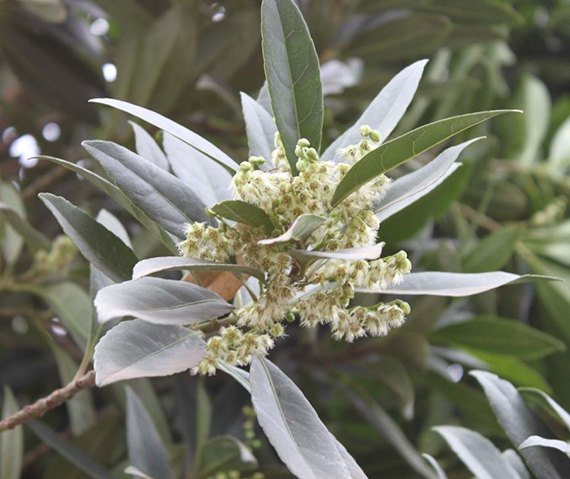
Two close cousins of the Blue Marble tree are found at Edison and Ford Winter Estates. The Japanese Blueberry tree (E. decipiens – meaning “misleading”) has become a popular addition attributable to its evergreen bearing, prunability, and the attractive red senescing leaves that populate the tree’s canopy all year round. The landscape of the newly revived Larchmont Avenue includes a young hedge of Japanese Blueberry trees along the property line on Euclid Avenue. A few years back, I successfully germinated a number of E. decipiens seeds, and several young trees have been planted near The Mangos, the Ford home.
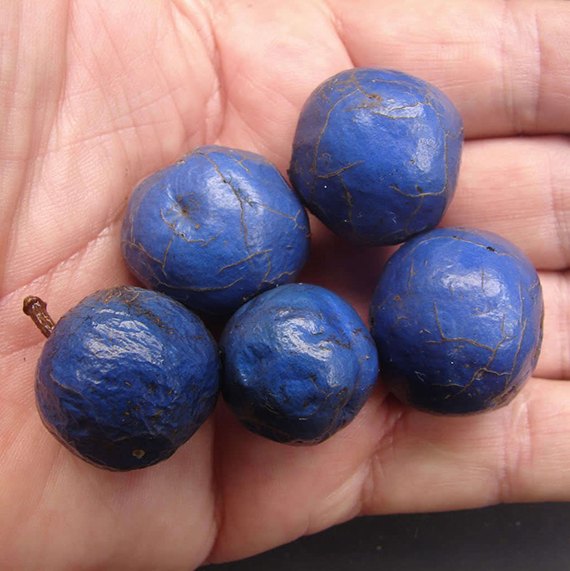
As a landscape tree, the Japanese Blueberry tree thrives in zones 8-11. These East Asian natives produce branches all the way down their trunk, but when the tree is still young, only three or four years old, just remove them, to create a standard. Earning its common name, the flowers on this Elaeocarpus are small, but they produce a small blue fruit, slightly larger than blueberries. The genus name means olive-like. We do not recommend it for human or pet consumption. Light and regular pruning will keep them a manageable and beautiful size for most landscapes. If left to grow naturally, they top out at about 20 feet. They should be watered regularly once planted because they tend to wilt in response to transplanting. In a year or two, they will bounce back and settle in. They can take full sun in Southwest Florida if gradually acclimated, otherwise avoid the harshest afternoon sun exposure when choosing the ideal location. These trees require very little in the way of additional nutrition, preferring a weekly deep watering and slight acidic soil with some sand and pine bark mulch. Heavily alkaline soils do not agree with Japanese Blueberry trees. Do not let them get waterlogged. Otherwise, protect from salt spray, water once a week until establishment or during excessive periods of drought and this handsome little tree will make a charming addition.
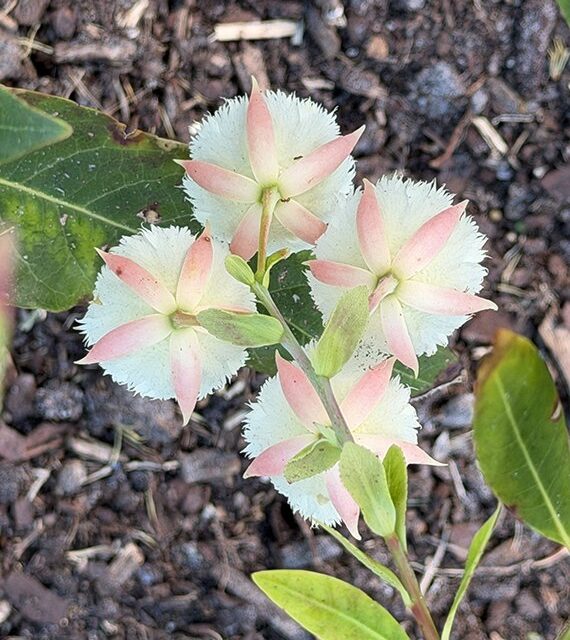
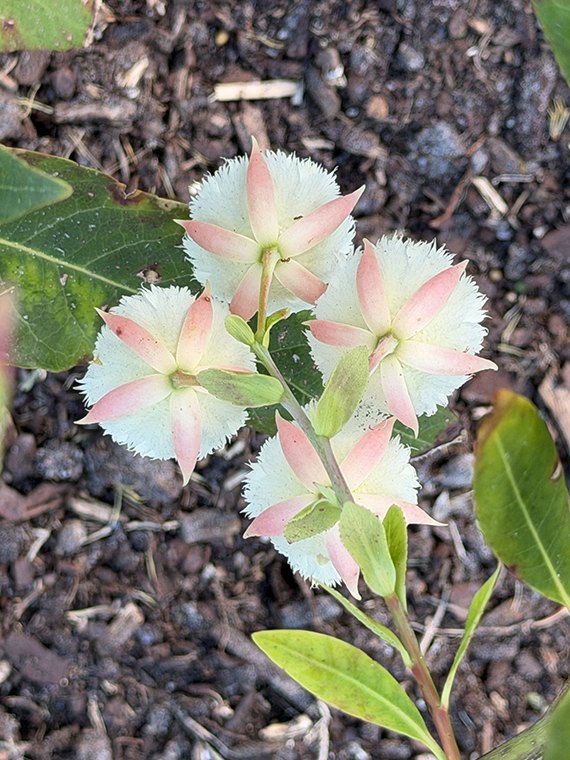
Looking for something a little smaller? Consider Elaeocarpus grandiflorus with the enchanting common name “Fairy Petticoats.” A perfect addition for a shady corner of the property, or potted for a lanai or balcony, this little shrub only grows to four feet and may be lightly pruned after flowering to maintain the desired size and form. Some call it the “Lily of the Valley Tree” for its low light requirement and fragrant, fringy rose-pink flowers. Though cold-hardy to the mid-20s (F), it grows best in zones 10-12. One thing to know? The Elaeocarpus grandiflorus is highly sensitive to overfeeding – just provide good soil and excellent drainage and let this pretty little shrub dance its way right into your heart. Be sure to catch it blooming, located near the garage on the Ford property.